

Distinguish PA6 and PA66 in Seconds
PA6 and PA66 are both polyamides, but they are not interchangeable in textile recycling and material sorting workflows. If PA6 and PA66 are mixed unintentionally, recycling quality, downstream processing, and material value can be affected.
Portable NIR spectroscopy can support fast PA6/PA66 identification directly in practical sorting environments. This makes it useful for textile recyclers, material handlers, and teams working with nylon-containing textile fractions.
See the textile recycling scanner workflow for PA6 and PA66 identification
Why PA6 and PA66 Are Difficult to Separate in Textile Recycling
PA6 and PA66 can look very similar. Visual inspection, labels, or manual sorting are usually not reliable enough when a textile material stream contains both nylon types.
This becomes a problem when textile fractions need to be prepared for recycling, reuse, or further material processing.
- PA6 and PA66 are both nylon materials.
- Labels may be missing, wrong, or incomplete.
- Mixed textile streams often contain unknown fiber compositions.
- Manual sorting cannot reliably distinguish PA6 from PA66.
Why PA6 vs PA66 Identification Matters
PA6 and PA66 have different material properties and processing behavior. When they are mixed without control, downstream recycling quality can suffer. Learn in detail why PA6 and PA66 must be separated.
For textile recycling projects, separating PA6 and PA66 can support cleaner material streams, better process control, and more reliable recycling decisions.
- Supports nylon sorting before recycling.
- Helps avoid cross-contamination between PA6 and PA66 fractions.
- Improves confidence in incoming textile material streams.
- Supports documentation of sorting and material verification workflows.
How Can PA6 and PA66 Be Distinguished in Textile Recycling?
PA6 and PA66 can be distinguished in textile recycling by using portable NIR spectroscopy with a suitable textile application. The scanner measures the material surface, compares the spectrum with reference models, and provides a fast result to support sorting, screening, or verification decisions.
How Portable NIR Supports PA6/PA66 Identification
Near-infrared spectroscopy measures how a material reflects NIR light. The measured spectrum can be compared with reference models to identify material classes or support defined sorting decisions.
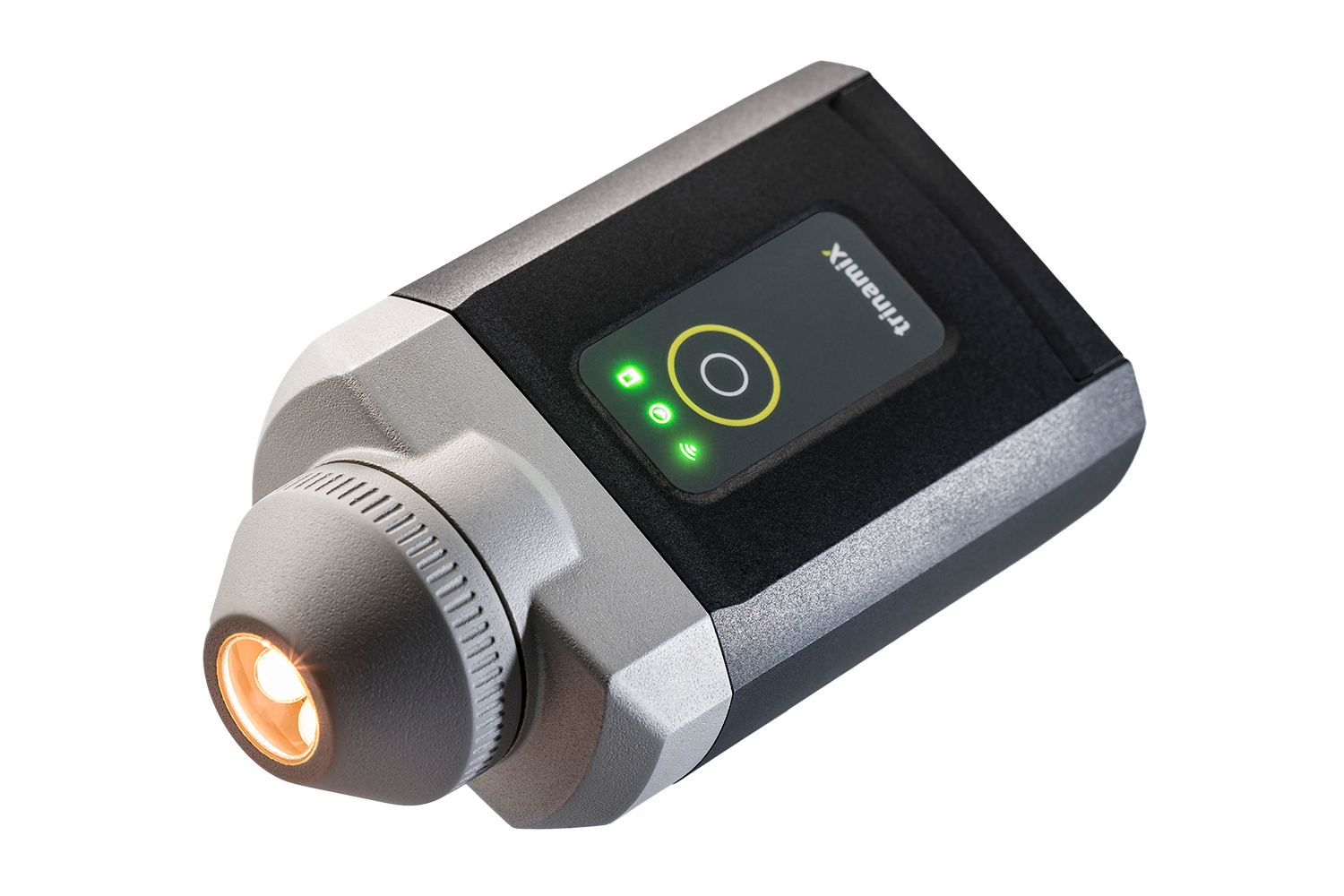
With the trinamiX PAL One textile applications, PA6/PA66 differentiation can be performed directly with a handheld device. The operator places the spectrometer on the textile sample, starts the scan, and receives a result in the application environment.
- Place the scanner directly on the textile sample.
- Start the measurement in the textile application.
- Review the PA6/PA66 material result on the device or app.
- Use the result for sorting, documentation, or further testing decisions.
Typical Use Cases for Textile Nylon Identification
PA6/PA66 identification is most useful when textile materials must be separated before recycling or further processing.
- Textile recycling pre-sorting
- Nylon-rich textile fraction control
- Incoming goods inspection for textile materials
- Material verification in recycling trials
- Sorting support for small and mid-sized textile recyclers
What Portable NIR Screening Can and Cannot Do
Portable NIR screening is a practical sorting and verification method. It does not replace every laboratory method, and results depend on sample condition, surface, composition, and the licensed application scope.
| Question | Practical answer |
|---|---|
| Can it support PA6/PA66 differentiation? | Yes, for suitable textile samples and within the relevant trinamiX textile application scope. |
| Does it replace laboratory testing? | No. It supports fast screening and sorting decisions, but lab testing may still be needed for critical cases. |
| Can it identify every textile blend? | No. Results depend on the application model, sample condition, and material composition. |
| Is it useful for manual sorting? | Yes. It can support operators by providing fast material information directly at the sorting station. |
From PA6/PA66 Identification to a Textile Sorting Workflow
PA6/PA66 differentiation should not be treated as an isolated feature. It is most useful as part of a broader textile sorting workflow where material identification, nylon sorting, documentation, and recycling decisions are connected.
For a broader overview of textile sorting with portable NIR, see our textile recycling scanner solution for nylon identification and textile sorting.
FAQ: PA6 and PA66 Identification
Can PA6 and PA66 be distinguished visually?
No. Visual inspection is usually not reliable enough to distinguish PA6 from PA66 in textile sorting workflows.
Why is PA6/PA66 separation important?
PA6 and PA66 have different material properties and processing behavior. Separating them can improve recycling quality and reduce contamination between nylon fractions.
Can portable NIR identify PA6 and PA66?
Portable NIR can support PA6/PA66 differentiation when used with a suitable textile application and suitable textile samples.
Who should use PA6/PA66 identification workflows?
PA6/PA66 identification is relevant for textile recyclers, material handlers, sorting operations, and teams working with nylon-rich textile fractions.
Textile Sorting and PA6/PA66 Identification
Need to identify textile materials or distinguish between PA6 and PA66 in a recycling workflow?
See our textile recycling scanner solution for PA6/PA66 identification for textile sorting, nylon identification, and portable material verification workflows.