

NIR Sortability Testing for Plastic Packaging
Plastic packaging is only recyclable in practice if it can be detected and sorted by the recycling infrastructure that handles it. For many packaging formats, the critical question is not only which polymer is used, but whether the finished item is visible to near-infrared (NIR) optical sorting systems.
This page explains how NIR sortability testing supports packaging development, packaging recyclability screening, and compliance preparation. It focuses on the practical question: can the packaging sample be detected by optical sorting systems before external validation or market launch?
What Is NIR Sortability Testing?
NIR sortability testing evaluates whether plastic packaging reflects enough near-infrared light to be detected by optical sorting systems. It is an early-stage screening method used to assess packaging detectability, identify sortability risks, and support packaging development before external recyclability testing.
Why Packaging Fails Optical Sorting in Practice
Many plastic packages are recyclable in theory but fail in real recycling systems because they cannot be reliably detected. Optical sorting systems depend on a measurable NIR signal. If the signal is too weak or distorted, the package may be mis-sorted, rejected, or lost from the recycling stream.
This makes packaging sortability a system-performance question rather than a material-property question.
- If packaging cannot be detected, it cannot be sorted correctly.
- If it cannot be sorted correctly, it may not reach the intended recycling stream.
- If it does not reach the correct stream, recyclability claims become difficult to support.
Common Causes of NIR Sortability Failure
NIR sortability problems often originate in design choices made during packaging development. Pigments, coatings, labels, multilayer structures, and additives can all affect NIR reflectivity and packaging detectability.
| Cause | Effect on sorting |
|---|---|
| Carbon-black pigments | Can absorb NIR light and make plastic difficult or impossible to detect. |
| Metallic inks or coatings | Can distort or block the NIR signal. |
| Full-body sleeves | Can hide the underlying polymer from optical sorting systems. |
| Multilayer structures | Can complicate detection depending on layer composition and surface behavior. |
| Fillers and additives | Can change NIR reflectivity and reduce detectability. |
How Optical Sorting Systems Use NIR Detectability
Optical sorting systems illuminate plastic items with near-infrared light and evaluate the reflected signal. Different polymers produce different spectral responses, allowing sorting systems to identify and separate materials in mixed waste streams.
For this to work, the package must reflect enough NIR light for the sensor to capture a usable signal. If NIR reflectivity is too low, the material may appear invisible or unreliable to the sorting system.
Why Black Plastic Often Fails NIR Sorting
Black plastic packaging is a common example of a sortability problem. Traditional carbon-black pigments can absorb near-infrared light instead of reflecting it. When this happens, the optical sorter may not receive enough signal to identify the polymer.
However, not all black plastics behave the same way. Some black or dark packaging materials are designed to be NIR-detectable. Measuring the actual NIR reflectivity of the finished sample is the practical way to distinguish between detectable and problematic materials.
For more background, see NIR detectability and identification of black plastic packaging.
Regulatory Drivers: PPWR, SB343 and Recyclability Claims
Regulatory frameworks increasingly focus on real recycling performance, not only theoretical recyclability. Packaging placed on the market must be compatible with the systems that collect, sort, and recycle it.
In Europe, PPWR-related packaging compliance increases the importance of design-for-recycling and evidence-based recyclability evaluation. In California, SB343 restricts recyclability claims unless products meet defined criteria, including practical sorting and processing relevance.
This does not mean that a portable NIR test alone proves compliance. It means that early NIR sortability testing can support development decisions before external recyclability assessments, pilot-scale tests, or certification processes.
For the broader regulatory context, see PPWR packaging compliance and packaging sortability evaluation.
Where NIR Sortability Testing Fits in Packaging Development
NIR sortability testing is most useful before packaging enters expensive validation steps. It helps packaging teams identify detectability risks early, compare design options, and decide whether changes are needed before external testing.
- Packaging concept: define polymer, pigments, labels, coatings, sleeves, and structure.
- Sample measurement: test NIR reflectivity on representative packaging samples.
- Risk assessment: identify low-reflectivity or detection-risk materials.
- Design adjustment: compare alternative pigments, labels, structures, or suppliers.
- External validation: proceed to formal packaging recyclability testing with better confidence.
What NIR Reflectivity Testing Measures
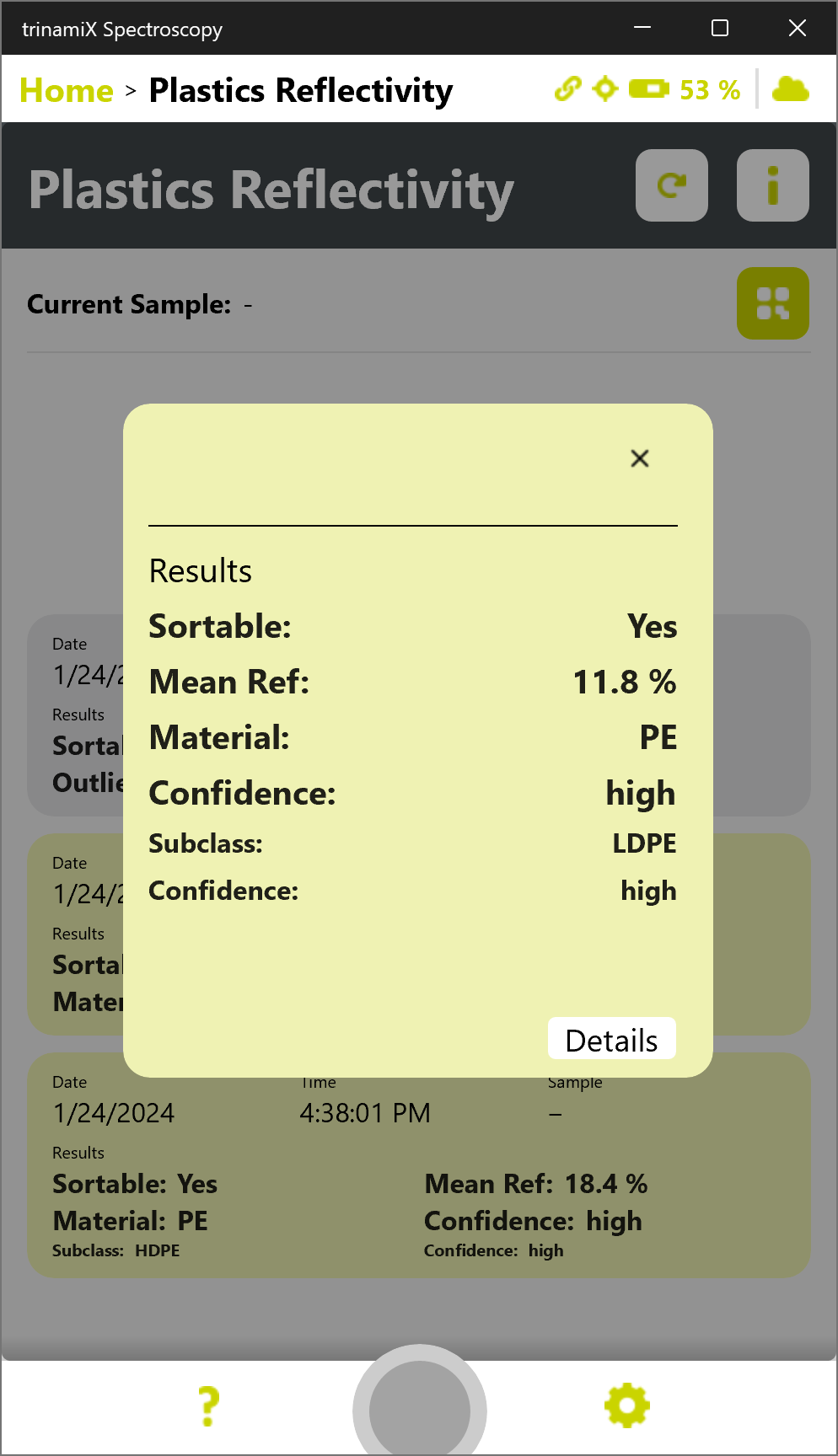
NIR reflectivity testing measures how strongly a plastic sample reflects near-infrared light. In practical packaging sortability screening, low reflectivity indicates that the sample may be difficult for optical sorting systems to detect reliably.
A useful engineering reference is the approximate 10% reflectivity threshold. If NIR reflectivity is below this level, the packaging may present a detectability risk. This threshold should be treated as an early-stage screening guideline, not as a replacement for external recyclability validation.
If a plastic package cannot be detected by optical sorting systems, it is unlikely to be sorted correctly in real recycling infrastructure.
Portable NIR Sortability Screening
Portable NIR screening allows packaging teams to evaluate detectability directly on physical samples. This can be useful during R&D, supplier comparison, prototype evaluation, and preparation for packaging recyclability assessments.
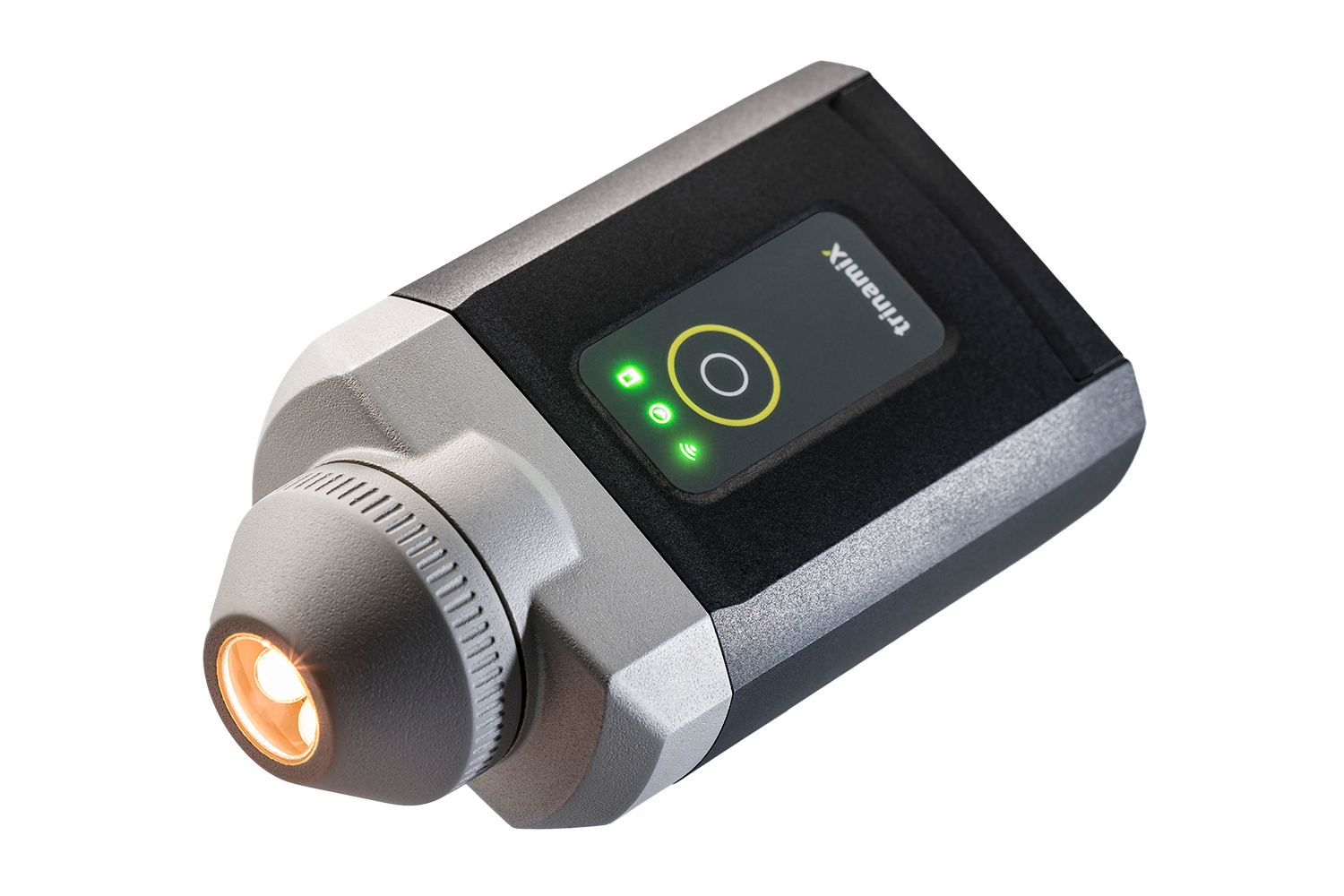
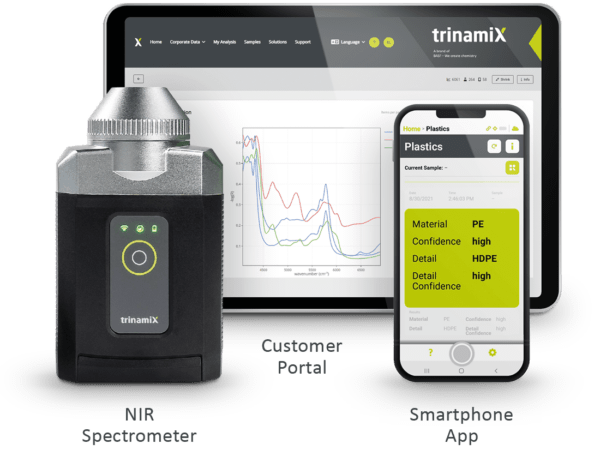
The NIR reflectivity testing solution for packaging sortability screening uses the PAL One handheld NIR spectrometer with the 10 Plastics Reflectivity application to measure NIR reflectivity and support early sortability decisions.
Typical outputs can support:
- comparison of packaging samples
- identification of low-reflectivity materials
- documentation of early-stage screening results
- selection of samples for external testing
Core Use Cases
Packaging R&D
Evaluate pigments, additives, labels, coatings, and design alternatives before finalizing a packaging concept.
Design-for-Recycling Reviews
Check whether packaging samples are likely to be detectable before moving into broader packaging recyclability assessments.
Supplier and Batch Comparison
Compare packaging materials from different suppliers or production batches where detectability may vary.
Pre-Validation Screening
Identify avoidable sortability risks before external testing, pilot-scale sorting trials, or certification-related workflows.
What This Test Cannot Replace
NIR sortability screening is a practical early-stage method. It should not be presented as standalone proof of recyclability, regulatory compliance, or successful sorting in every recycling facility.
| Question | Practical answer |
|---|---|
| Does it prove packaging is recyclable? | No. It supports detectability screening, not full recyclability certification. |
| Does it replace pilot-scale sorting tests? | No. Pilot-scale or external testing may still be required. |
| Does it evaluate full packaging recyclability? | No. It focuses on NIR detectability and packaging sortability risk. |
| Can it support development decisions? | Yes. That is its strongest role. |
Who Should Use NIR Sortability Testing?
The strongest fit is for teams that develop, specify, evaluate, or audit plastic packaging before it reaches the market or enters formal recyclability assessment.
- packaging R&D teams
- brand owners and packaging developers
- material suppliers
- recyclability consultants
- sorting and recycling specialists
- sustainability and compliance teams
Request a Packaging Sample Test
If you are unsure whether a packaging sample is detectable by NIR sorting systems, a sample test is the most practical next step. The result can help determine whether your material should proceed to external testing, be redesigned, or be compared with alternative samples.
[Insert WPForms shortcode: Packaging Sortability Sample Test]
Next Step in the Packaging Evaluation Workflow
Use this page to understand packaging sortability and NIR detectability challenges. Use the product page to evaluate the actual measurement setup.
FAQ: Packaging Sortability Testing
What is NIR sortability in plastic recycling?
NIR sortability describes whether a plastic packaging sample reflects enough near-infrared light to be detected by optical sorting systems in recycling facilities.
Why does NIR reflectivity matter for packaging recyclability?
If a packaging material reflects too little NIR light, sorting systems may fail to detect it. This can prevent the package from entering the correct recycling stream.
Can NIR sortability testing prove recyclability?
No. It supports early detectability screening. Full recyclability assessment or certification may still require external testing.
When should packaging sortability be tested?
It is most useful during packaging development, supplier comparison, and before external recyclability testing.
Is this only relevant for black plastic?
No. Black plastic is a common example, but pigments, coatings, sleeves, multilayer structures, and additives can also affect NIR detectability.