
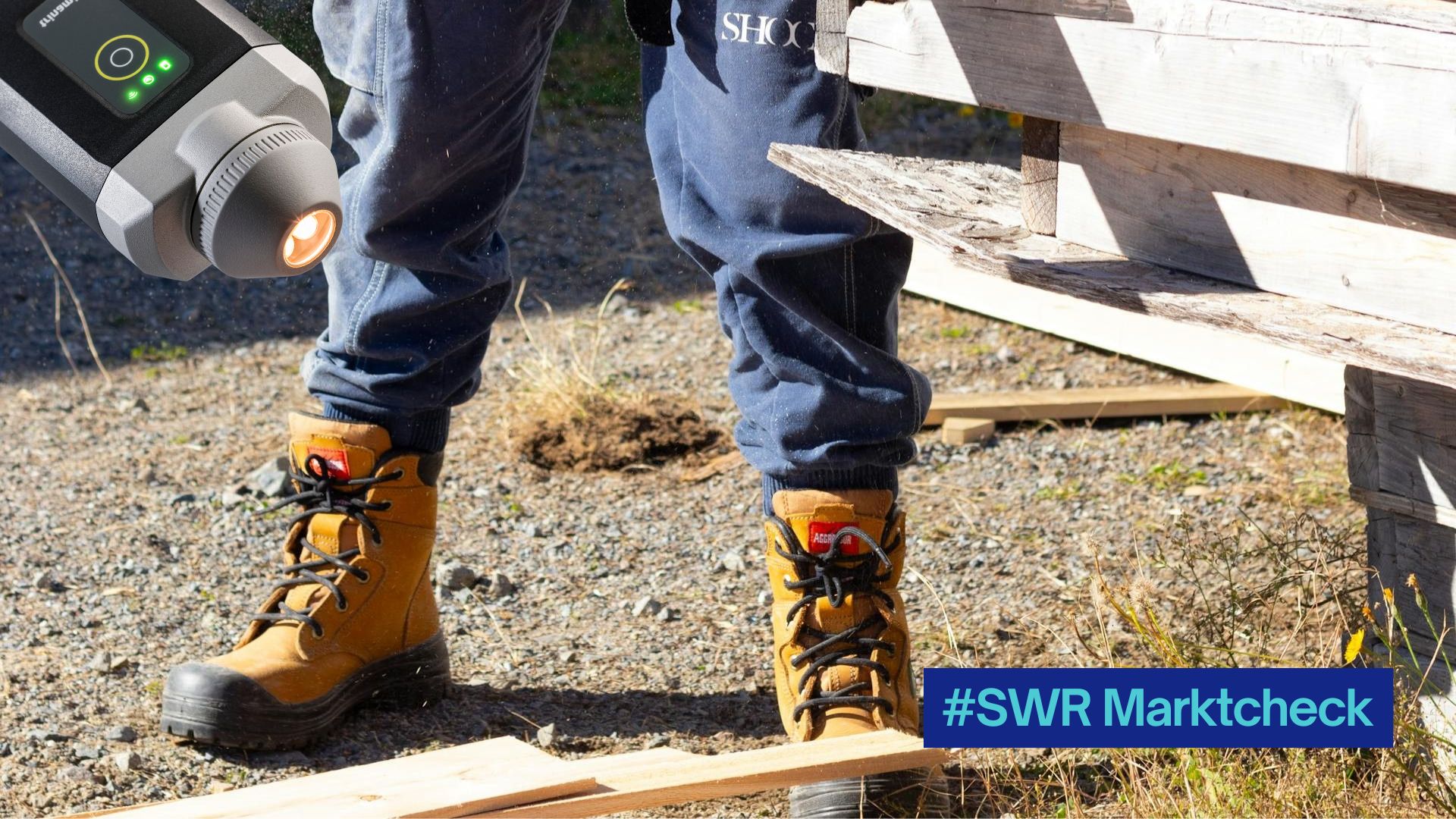
A portable textile analysis device developed by trinamiX was featured in an episode of the German consumer program Marktcheck, broadcast on SWR.
The segment focused on the analysis of textile materials used in workwear and consumer garments. During the program, a handheld textile scanner was demonstrated to show how fiber composition can be identified directly on finished products.
The episode addressed the broader question of whether textile labeling and material quality claims can be verified through independent testing methods.
This coverage generated interest among professionals searching for:
- The textile scanner shown on TV
- The textile analysis device used in the broadcast
- How the scanner works
- Where such technology can be obtained
The following sections provide a factual recap and technical explanation.
What Was Shown in the TV Segment
According to publicly available information about the episode, the segment examined workwear products and compared material properties and labeling.
As part of the analysis process:
- A portable textile scanner was used to analyze garments directly
- Fiber composition was measured without cutting or destroying the sample
- The device demonstrated rapid, on-site material identification
- Results were used to support material verification in the context of the program’s testing methodology
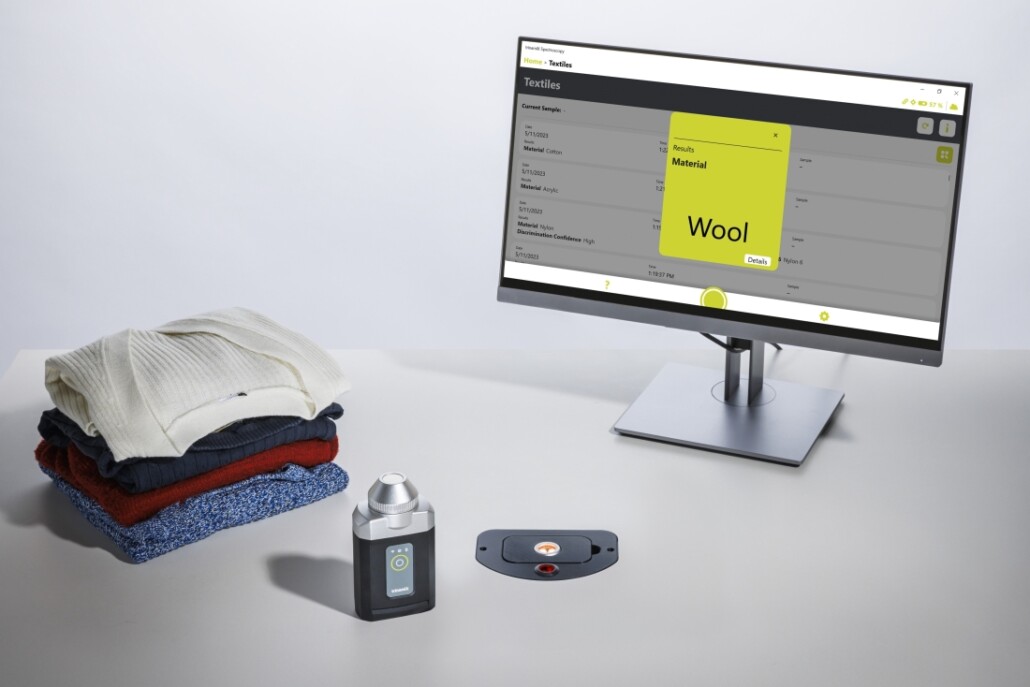
The textile analysis shown on TV was based on near-infrared (NIR) spectroscopy, a non-destructive method commonly used for material identification.
The core problem addressed in the segment was transparency:
- Are textile compositions accurately labeled?
- Can materials be verified outside of laboratory environments?
- Is rapid textile testing possible in real-world settings?
The broadcast illustrated that portable textile analysis devices can provide immediate insight into fiber composition, supporting quality assessment and compliance verification processes.
No endorsements or product rankings were issued in relation to the scanner itself. The device was presented as a technical tool used during material evaluation.
How Textile Analysis Technology Works
Portable NIR Textile Analysis
Modern textile scanners typically use near-infrared (NIR) spectroscopy to identify fibers.
In simple terms:
- The device emits near-infrared light onto the textile surface.
- Different fibers absorb and reflect light in characteristic patterns.
- The reflected signal is analyzed and compared against reference spectra.
- The system determines the most probable fiber composition.
This process:
- Is non-destructive
- Requires no chemical reagents
- Produces results within seconds
- Can be performed directly on finished garments
What Materials Can Be Identified?
Depending on calibration and configuration, portable textile analysis devices can detect common fibers such as:
- Cotton
- Polyester
- Polyamide
- Viscose
- Wool
- Blended materials
The technology is particularly useful when laboratory testing is impractical due to time constraints or operational scale.
Typical Application Areas
Portable textile scanners are used in:
- Incoming goods inspection
- Textile recycling facilities
- Quality assurance in production
- Compliance verification
- Sustainability and circular economy initiatives
The TV segment demonstrated how such technology can be applied in real-world testing scenarios.
Who Should Be Interested in Textile Analysis Technology?
The textile analysis device shown on TV is particularly relevant for professional users, including:
Quality Control Professionals
For verifying incoming goods and supplier compliance.
Textile Recycling Operators
For automated or semi-automated fiber sorting and material classification.
Compliance and Regulatory Teams
For verifying labeling accuracy and material declarations.
Sustainability and ESG Teams
For improving transparency in textile supply chains and enabling data-driven circularity initiatives.
The technology is designed for professional environments where material identification accuracy and operational efficiency are critical.
Professional Consultation and Demonstration
Organizations interested in textile analysis technology for quality assurance, recycling, or compliance applications are invited to contact Solid Scanner.
We offer:
- Technical consultations
- Application discussions
- Demonstration options for professional evaluation
For more information or to discuss your use case, please contact our team directly through the Solid Scanner website.
Frequently Asked Questions
What textile analysis device was shown on TV?
A portable near-infrared (NIR) textile scanner developed by trinamiX was demonstrated during an episode of the German TV program Marktcheck on SWR.
How does a textile scanner identify fibers?
The device uses near-infrared light to measure how different fibers reflect and absorb specific wavelengths. These spectral patterns are compared with reference data to determine fiber composition.
Can textile composition be tested without laboratory analysis?
Yes. Portable NIR textile analysis devices allow non-destructive, on-site material identification without the need for chemical testing or laboratory infrastructure. Laboratory testing may still be required for certain regulatory or forensic applications.
Where can companies obtain such a textile scanner?
Companies seeking a professional textile analysis solution can contact Solid Scanner to discuss technical specifications, application requirements, and implementation options.
Is the textile scanner suitable for recycling operations?
Portable NIR textile analysis devices are commonly used in recycling environments to support fiber identification and sorting processes, depending on operational requirements and calibration setup.
This page provides an informational overview of the textile analysis device featured on German television and explains the underlying technology for professional audiences seeking reliable material identification solutions.