

NIR Sortability Testing for Plastic Packaging
Modern recycling systems depend on near-infrared (NIR) optical sorting to identify and separate plastics. For packaging to be truly recyclable, it must not only be theoretically recyclable — it must also be detectable and sortable in real recycling infrastructure.
Packaging teams therefore increasingly need practical ways to verify sortability during development, before products reach the market. Modern recycling systems depend on near-infrared (NIR) optical sorting to identify and separate plastics within mixed waste streams and plastic packaging analysis solutions.
Why Packaging Fails Optical Sorting in Practice
Many plastic packaging formats are technically recyclable but fail in real recycling systems.
The reason is not material classification — it is detectability.
If a packaging item cannot be reliably detected by NIR optical sorting systems:
- it is not correctly identified
- it is not sorted into the right stream
- it does not enter recycling processes
As a result, recyclability becomes a system performance issue, not a material property.
Common Causes of NIR Sortability Failure
1. Low NIR reflectivity
If a material reflects insufficient infrared light, sorting systems cannot generate a reliable signal.
2. Pigments and decorative elements
Carbon black, metallic inks, and coatings can absorb or distort NIR signals.
3. Complex material structures
Multilayer films, sleeves, fillers, and barrier layers can reduce detectability.
These effects are frequently observed in real-world packaging audits.
Packaging Sortability and NIR Optical Sorting in Recycling
Recycling facilities rely on optical sorting systems to identify polymers in mixed waste streams. These systems illuminate materials with near-infrared light and analyze the reflected signal to determine the polymer type.
If packaging cannot be reliably detected, it may be mis-sorted or rejected from recycling streams — even if the polymer itself is technically recyclable.
Design choices that often reduce detectability include:
- carbon-black pigments
- metallic inks or coatings
- multilayer film structures
- full-body shrink sleeves
- heavy filler content
When packaging becomes invisible to optical sorting systems, it is unlikely to be recovered during recycling.
How Optical Sorting Systems Detect Plastics Using NIR
Near-infrared (NIR) sorting systems identify plastics by measuring how materials reflect specific wavelengths of infrared light. Each polymer has a characteristic spectral signature that can be detected by optical sensors. When a plastic item passes along a sorting conveyor, the system analyzes this signal and directs the item into the appropriate material stream.
For accurate detection, packaging must reflect sufficient NIR light. If reflectivity is too low, the system may fail to identify the material. Because of this, NIR reflectivity has become a critical parameter in packaging design for recycling.
Why Black Plastics Often Fail NIR Optical Sorting
One of the most common challenges in recycling is the detection of black plastic packaging. Many black plastics use carbon-black pigments, which strongly absorb near-infrared radiation. When NIR light is absorbed rather than reflected, optical sorting sensors cannot capture a usable signal.
As a result:
- black plastic packaging may appear invisible to NIR sensors
- items can be mis-sorted or rejected from recycling streams
- recyclability claims may become difficult to support
However, not all black plastics behave the same way. Some modern pigments allow sufficient reflectivity for detection. Testing the actual NIR reflectivity of a packaging material is therefore the only reliable way to determine whether it can be detected by optical sorting systems.
Why Packaging Detectability Matters for Recycling
Failure to meet optical sortability requirements can have significant consequences for packaging manufacturers and brand owners. Poorly detectable materials can lead to:
Real-world audits regularly identify packaging designs that fail optical sorting tests due to low NIR visibility. Without measurement data, recyclability remains an assumption rather than a verified property.
Regulatory Drivers for Packaging Sortability
Regulatory frameworks are increasingly emphasizing real recycling performance, not only theoretical recyclability. The EU Packaging and Packaging Waste Regulation (PPWR) aims to ensure that packaging placed on the market can be effectively recycled within existing recycling systems. Learn here more about PPWR packaging compliance requirements.
In the United States, the California SB 343 Accurate Recycling Labeling Law restricts recyclability claims unless packaging meets defined criteria including successful sorting in recycling facilities.
These regulatory developments reinforce the importance of verifying packaging detectability within optical sorting systems. As a result, packaging teams increasingly incorporate NIR sortability evaluation during product development.
Why Early NIR Sortability Testing Matters in Packaging Development
Evaluating optical detectability early in the design process allows engineers to identify potential recyclability issues before large-scale production or external certification testing.
Industry testing frameworks such as the APR NIR sorting protocols include preliminary screening methods that allow rapid assessment of polymer detectability prior to full pilot-scale sorting tests.
Early testing enables packaging developers to:
- identify problematic pigments or additives
- compare alternative materials
- optimize packaging designs for recyclability
- reduce the risk of failed external recyclability assessments
By integrating sortability evaluation into development workflows, teams can improve the likelihood that packaging performs correctly in modern recycling infrastructure.
Where Sortability Screening Fits in Packaging Development
- Packaging design
Define polymer, pigments, coatings, labels, and structure. - NIR reflectivity screening
Evaluate whether the packaging can be detected by optical sorting systems. - Risk identification
Identify materials or features that reduce detectability. - Design adjustment
Compare alternatives before committing to tooling or external testing. - External recyclability testing
Proceed to APR / certification / pilot testing with reduced risk.
Portable NIR Reflectivity Testing for Plastic Sortability
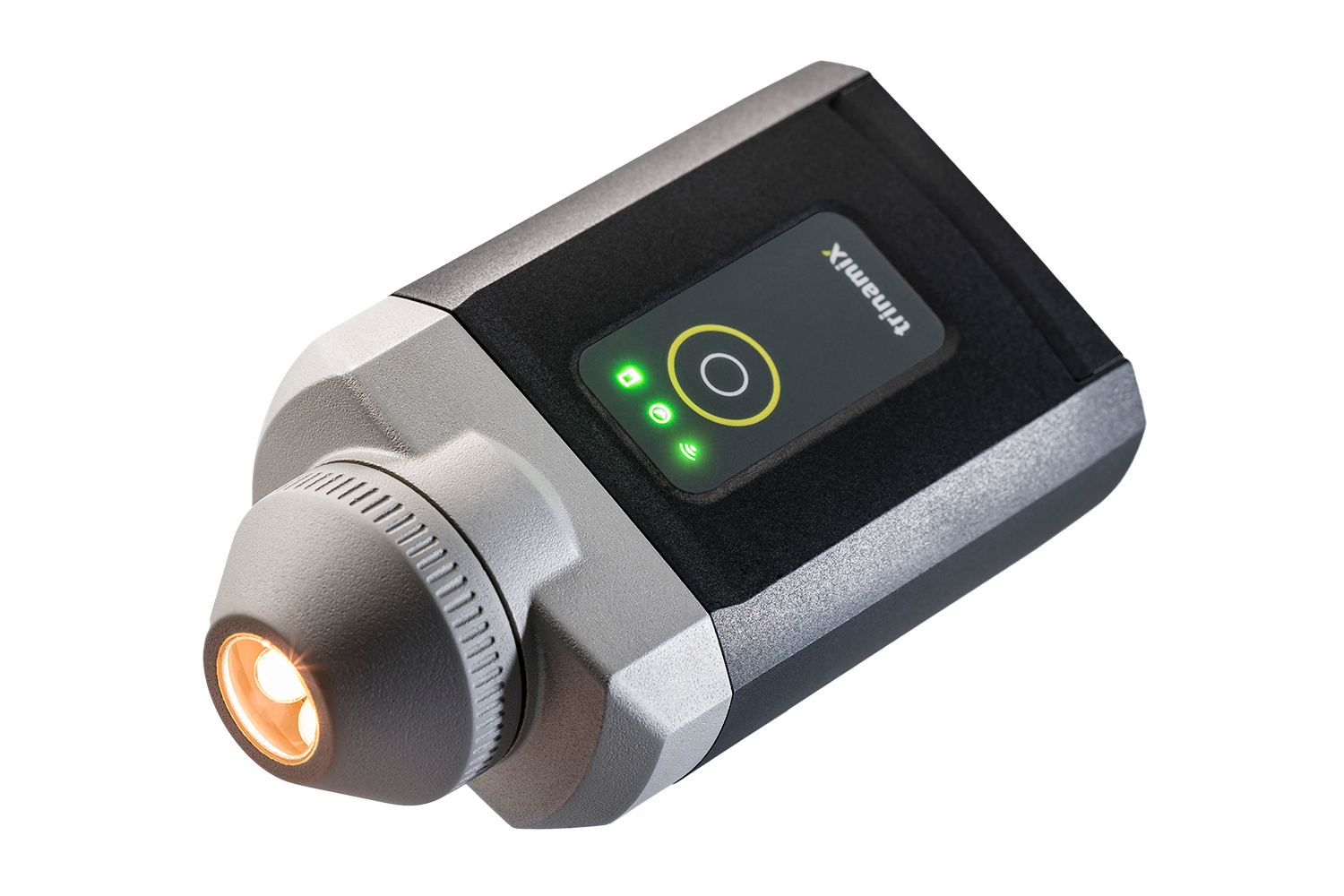
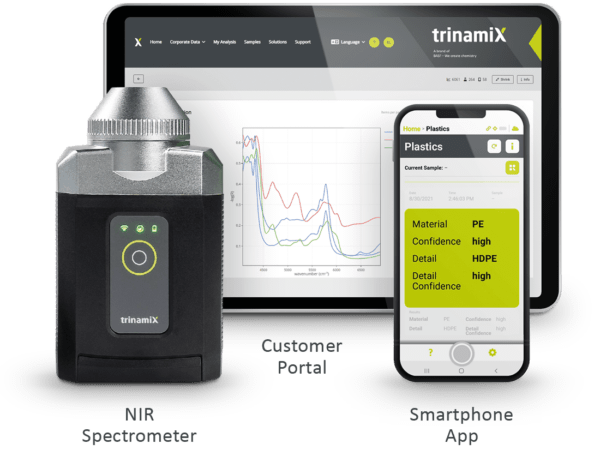
The trinamiX Reflectivity Check combines the PAL One handheld NIR spectrometer with the 10 Plastics Reflectivity application to measure the near-infrared reflectivity of plastic materials. This portable system allows packaging teams to evaluate NIR detectability directly on samples, without the need for laboratory equipment.
The system can be used:
- during packaging R&D
- in supplier audits
- on production lines
- during recyclability evaluations
Scan results are automatically stored in a secure cloud portal and can be exported as PDF documentation for compliance or reporting purposes.
How NIR Reflectivity Testing Works
- Scan the plastic sample using the trinamiX PAL One handheld NIR spectrometer
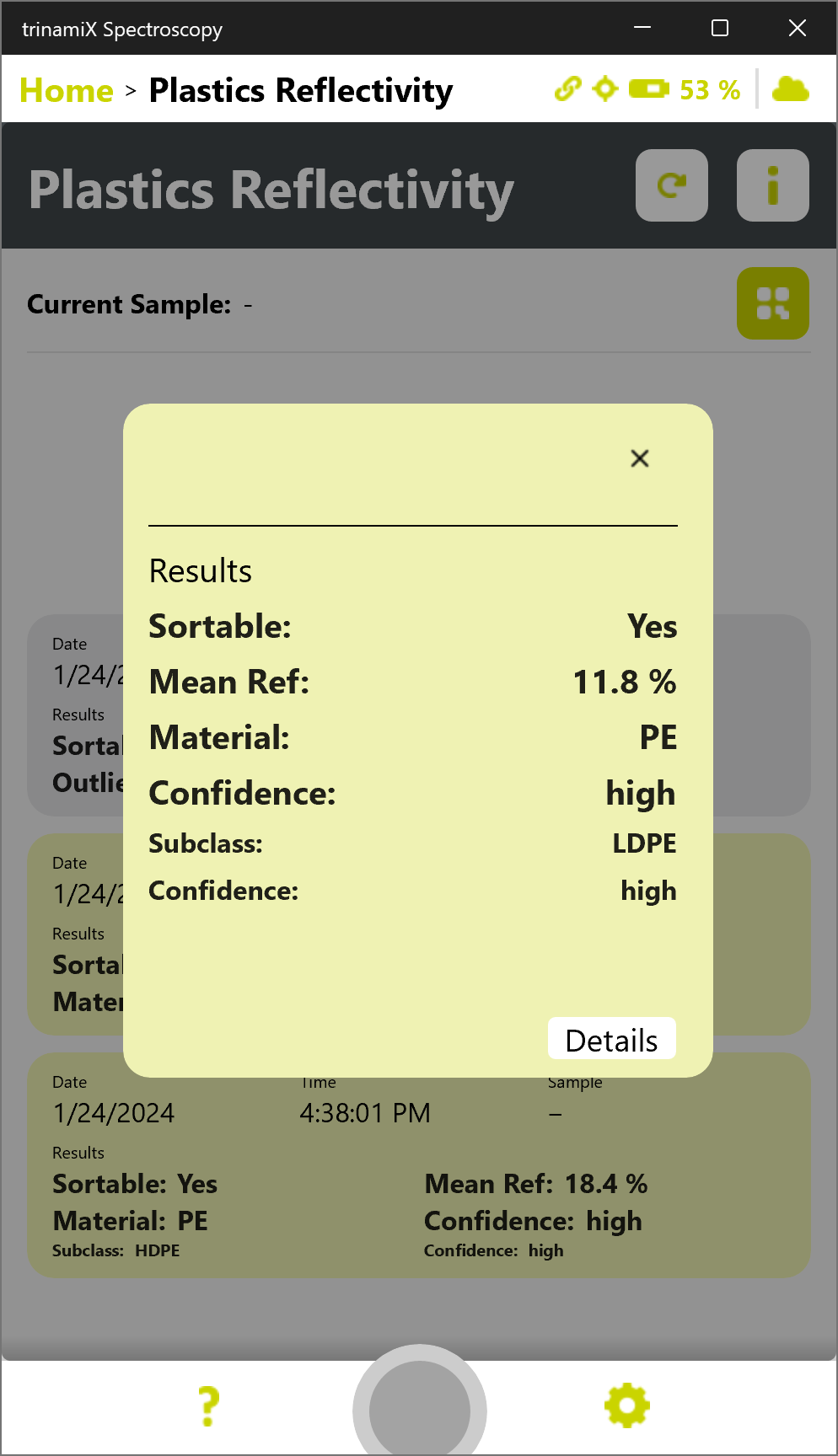
- The application measures NIR reflectivity and attempts polymer identification
- Results are stored in a secure customer portal, including detailed reports with reflectivity values and identification confidence
Sample results:
- White PE tray:
Reflectivity 11.8%, ID: PE, subclass: LDPE → SORTABLE - Black PET bottle:
Reflectivity 4.2%, ID: PET → LIMITED SORTABILITY - Black carbon clip:
Reflectivity < 1%, ID failed → NOT DETECTABLE
Engineering Reference: 10% Reflectivity Threshold
This threshold is used as an early-stage indicator, not a replacement for full recyclability testing.
Core Use Cases
Regulatory Approval and External Audits
Packaging manufacturers and brand owners can verify sortability before submitting materials to external recyclability programs such as RecyClass or other certification frameworks.
Packaging R&D and Additive Testing
Material developers can evaluate the impact of pigments, fillers, labels, or coatings on NIR reflectivity during packaging design and prototyping.
Who Should Use This Tool?
The Reflectivity Check supports professionals working across the packaging development and recycling value chain:
- packaging R&D engineers
- material scientists
- recyclers and sorting technology specialists
- packaging consultants and recyclability auditors
- sustainability and compliance teams
FAQ – Packaging Sortability Testing
What is NIR sortability in plastic recycling?
NIR sortability describes whether a plastic material reflects sufficient near-infrared light to be detected by optical sorting systems used in recycling facilities.
Why is NIR reflectivity important for packaging recyclability?
If packaging absorbs infrared light instead of reflecting it, sorting sensors may fail to detect the material, preventing it from entering the correct recycling stream.
How is packaging sortability tested during development?
Packaging developers measure NIR reflectivity using spectroscopy tools or preliminary screening tests before conducting full recyclability evaluations.
Next step in evaluation
Let’s make your packaging circular by design - with clarity, compliance, and confidence.