

Identify Plastics On-Site
– Fast, Reliable, and Portable
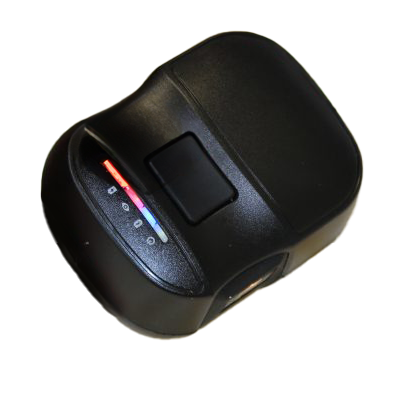
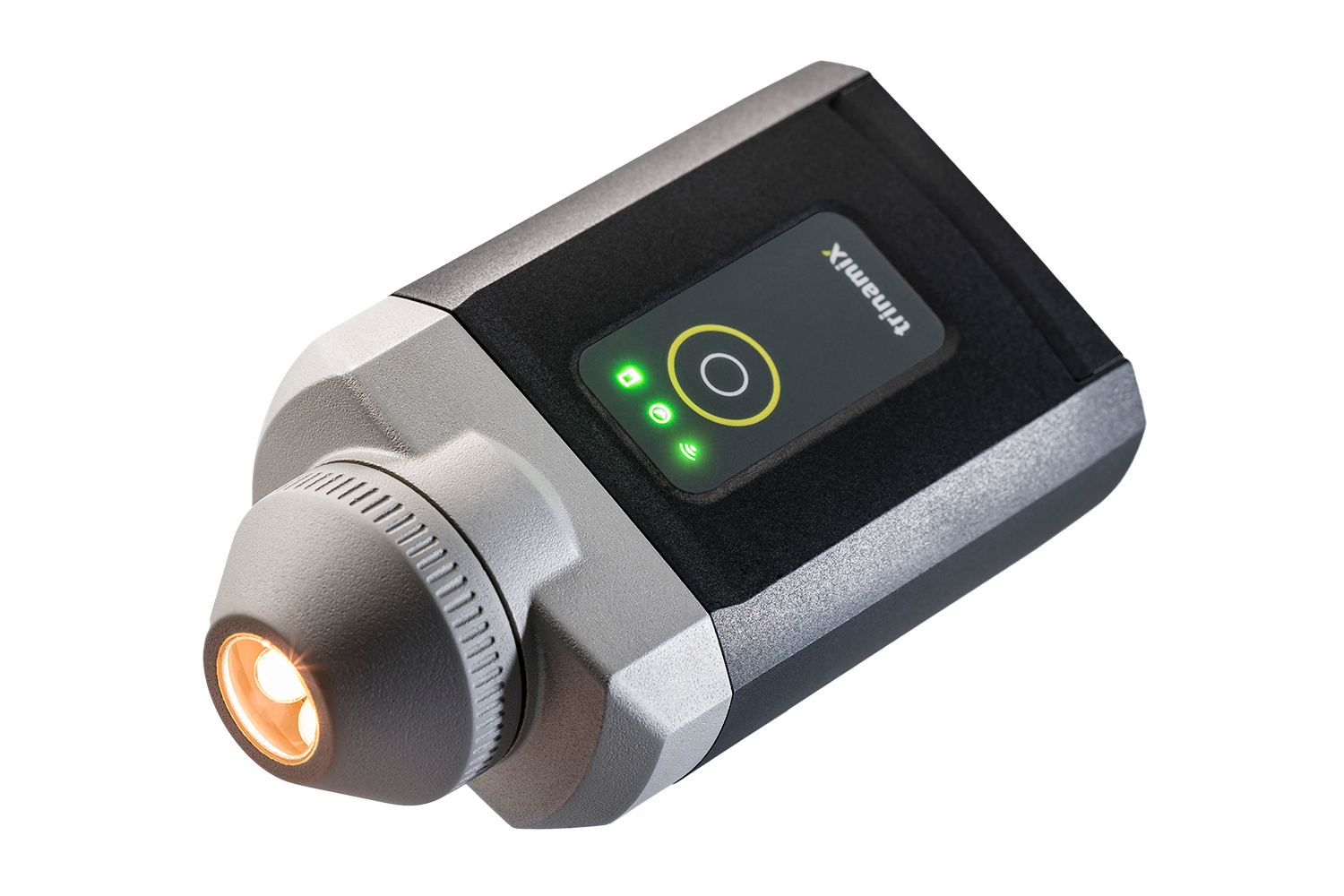
The trinamiX PAL One is a handheld near-infrared (NIR) spectrometer that identifies plastic types based on their spectral fingerprint. It is designed for recyclers, QA teams, and sustainability professionals who need fast, on-the-spot decisions without lab equipment.
From simple polyolefins to complex multilayer films and technical polymers, you get actionable insights in seconds.
Table of contents
Why Plastic Identification Matters
- Ensure clean material streams for recycling
- Avoid non-conformities in incoming goods
- Evaluate recyclability of packaging during product development
- Document material types for audits or customers
Portable Material Analysis with trinamiX PAL One
- Battery-powered handheld spectrometer
- App available for Android, iOS, or Windows
- Secure cloud access for documentation and export
- Works offline with optional cloud sync
- Used worldwide in recycling, QA, and R&D
Key Applications for Plastics
| Application | What It Solves | Link |
|---|---|---|
| 10 Plastics | Identifies the most common plastic types for sorting or QA | Go to Plastics |
| Plastics Max | Extended identification incl. ABS, PBT, PET-G, PSU, etc. | Go to Plastics |
| Reflectivity | Sortability evaluation based on NIR reflectivity (APR guideline) | Go to Reflectivity |
| Multi-Material Films | Detects multilayer structures and PA content in % | Go to Films |
| PE/PP Quantification | Checks material ratios in blends and compounds | Go to PE/PP |
| Correlation App | Verifies if a material matches your reference (QA use) | Go to Correlation |
Not sure which application is best for you?
Designed for Operators and Engineers
- Easy one-button operation with instant results
- Detailed data access via secure cloud portal
- License only what you need – upgrade anytime
- Can be integrated into a manual sorting table
We will find the right configuration for you → Get in touch
How It Works
- Place the scanner on the sample
- Press the button – NIR light is emitted and reflected
- The app shows the result within ~2 seconds
- Optional: result is uploaded to the cloud portal
Who Uses This?
- Recycling plants with plastic sorting (MRF)
- QA and lab managers in plastics manufacturing
- Sustainability and packaging engineers
Related Solutions
Limitations of NIR Spectroscopy for Moisture Detection in Plastics
Moisture content plays a critical role in polymer processing and material quality. Even small amounts of water can influence melt behavior, cause hydrolytic degradation in moisture-sensitive polymers such as polyesters or polyamides, and introduce defects such as bubbles, reduced mechanical strength, or inconsistent surface finish. In recycling and compounding environments, uncontrolled moisture can also lead to unstable extrusion conditions and variability in final material properties. For this reason, reliable monitoring of polymer water absorption and residual moisture is an important aspect of industrial polymer processing.
Near-infrared (NIR) spectroscopy can theoretically detect water because water molecules exhibit characteristic absorption features in the near-infrared region. These absorption bands originate from overtone and combination vibrations of the O–H bond. When NIR radiation interacts with a material, the presence of water slightly modifies the reflected or transmitted spectrum. In bulk agricultural materials or powders, these spectral changes allow calibrated systems to estimate moisture content.
In plastic materials, however, moisture measurement using NIR spectroscopy is significantly more challenging. Water concentrations in polymers are often extremely low, frequently below one percent. At these levels, the spectral contribution of water is weak compared to the much stronger absorption features generated by the polymer matrix itself. As a result, the measured spectrum is typically dominated by polymer-specific NIR absorption bands, while the signal associated with absorbed moisture remains small.
Reliable polymer moisture detection using NIR therefore requires carefully developed calibration models that are specific to the polymer type, material formulation, and measurement conditions. Without such calibration, the spectral response of the polymer can easily mask the signal related to moisture.
Additional factors further complicate NIR analysis of polymers. Colorants, mineral fillers, stabilizers, and other additives influence the optical properties of the material and can modify the resulting spectrum. Surface roughness, crystallinity, transparency, and scattering behavior also affect the reflected NIR signal. These variables introduce spectral variability that can obscure the already weak signatures associated with absorbed water.
Material geometry introduces another limitation. Thin polymer products such as films, fibers, or extruded strands provide only a short optical interaction path for NIR radiation. Because moisture detection via NIR spectroscopy depends on sufficient light–material interaction, this reduced path length decreases sensitivity to minor constituents such as water.
Under controlled laboratory conditions, NIR moisture estimation in polymers can be feasible for bulk materials such as polymer pellets when stable calibration models and controlled sample presentation are available. In portable industrial systems, however, reliable measurement of trace moisture levels remains difficult.
For this reason, handheld NIR spectrometers used in recycling, quality assurance, and incoming material inspection are primarily optimized for polymer identification based on spectral fingerprints rather than precise moisture measurement in plastic materials.
FAQ
Can I identify black plastics?
No. Most carbon black materials cannot be reliably identified using NIR spectroscopy due to very low reflectivity.
Can I use the device without internet?
Yes. You can scan materials and get results offline. Internet is only required for cloud reporting and data synchronization.
Is the device upgradeable?
Yes. All software applications are licensed individually and can be added later without changing the hardware.
Does the scanner support other materials like textiles?
Yes. The same trinamiX PAL One device can be used for textiles, including blends, wool, and PA 6/6.6. Learn more about textile analysis solutions here.
Can NIR spectroscopy measure moisture in plastics?
NIR spectroscopy can detect water absorption in polymers in principle, but reliable moisture measurement in plastic materials is challenging. Moisture concentrations are typically very low and polymer absorption bands often dominate the spectrum. As a result, handheld NIR systems used in recycling and quality control are primarily optimized for polymer identification rather than precise moisture quantification.